



Cutting-edge technology by SPEKTRA
Efficient hardware needs a powerful software.
Our CS Q-LEAP™ calibration software was created in close cooperation with the SPEKTRA calibration laboratory accredited by DAkkS. Even the most basic configuration meets the requirements of any efficiently operating calibration laboratory. Moreover, the CS software can easily be adapted to the workflows of any company.
Extensive modes of operation
- Sensor calibration – enables the calibration of a wide range of sensors
- Sweep – helps determine whether a tested sensor can actually be calibrated
- Measurement – for the calibration of vibration calibrators
- Generation – designed to generate one of the possible vibration quantities with high precision
- Primarycalibration – calibration, measurement and signal generation
- Self-test for the HERO™ vibration control unit*
*for CS Q-LEAP™ calibration systems

Easily create calibration setups
- easy storage of complete calibration process in setup files
- simple drawing-up of setups by guided procedures
- automatic loading of the device under test into the setup when using TEDS or ID modules
- fail-safe operation of the test setup based on the performance data of the exciter

Integrated sensor database
- high-performance search tool will find any test item that has ever been calibrated by the system
- administration of sensor type templates
- easy introduction of new test items based on sensor type
- easy administration of sensor data, including calibration intervals, ID numbers (TEDS, DALLAS-ID, etc.) and many more
Easy data storage & export
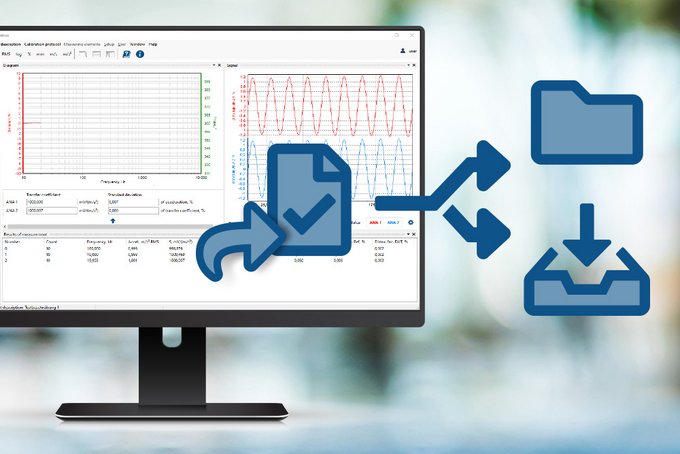
- ISO 17025-compliant storage of setup and calibration data in calibration report or log files
- Easy export of data to text or spreadsheet files (e.g., MS Word®, MS Excel®) for creating printable calibration certificates
- Optional:
- Data export via VB scripts or other programs into any data format (uses Windows COM interface technology)
- Storage of calibration reports on a database server (for large data volumes)


Every business company is organized in its own way, making use of different software tools. A calibration system cannot be regarded as an island; it should be integrated in the company‘s workflow and must seamlessly exchange data with other software.
For instance, data about calibration jobs need to be imported from an ERP system and calibration data need to be exported to instrumentation databases or any third-party software. The CS software includes the appropriate automation software interfaces by means of which any SPEKTRA calibration system can be adapted to any software environment and workflow.
Even complex calibration procedures can be accomplished in this manner by using small add-on programs. User-specific solutions of this kind can be implemented by the customer himself using common software tools or tailor-made by the experienced SPEKTRA software team.
