


Accurate measurements are the key to success - whether in research, development or production. But strain and harsh operation conditions can reduce the accuracy of your sensors. With accredited laboratories, state-of-the-art technology and tailored services, we offer you more than just calibration: we reliably maintain your measurement equipment at the highest level - efficiently and directly on-site.

With an international network of accredited laboratories in Europe and the USA, we are your partner for dynamic measurands such as vibration, shock and sound pressure level. Our services go beyond calibration: we combine state-of-the-art technological solutions with individual consulting to test your measurement equipment precisely and efficiently.
Experience precision that connects - worldwide and on-site.

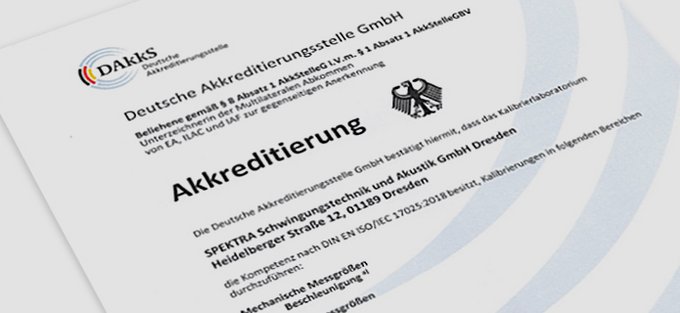
Our DAkkS (successor of DKD) accredited calibration laboratory D-K-15183-01-00 has reached a leading position worldwide. We are accredited for the measurands acceleration and sound pressure level as well as for measurement amplifiers according to the international standard DIN EN ISO/IEC 17025.
Using our own CS calibration system, our calibration laboratory is able to perform calibration with minimum measurement uncertainty for almost any possible application.
Overview of flexible accreditation (in German, only)
“Our main laboratory for dynamic measurements in Dresden is a global leader in its field.
With SPEKTRA LABS,we are now expanding this expertise internationally.”
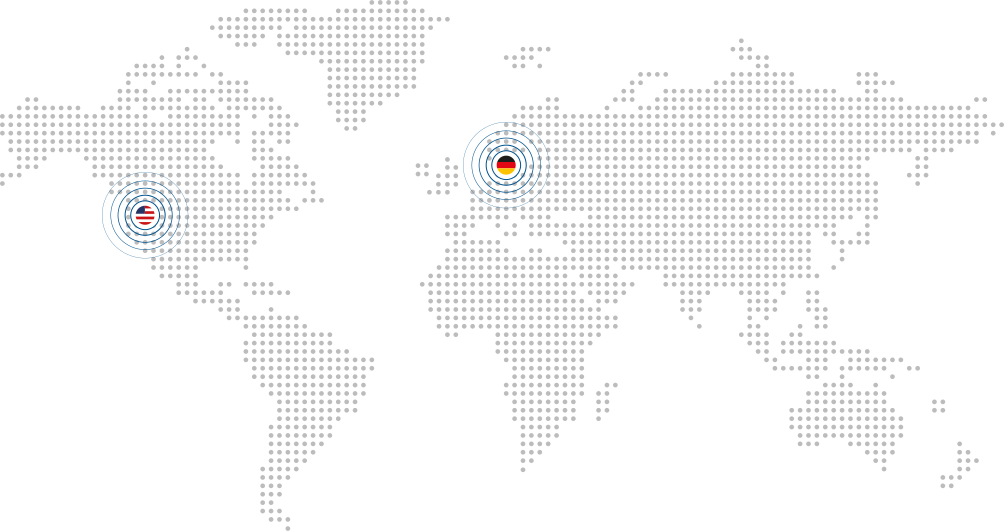
SPEKTRA LABS has locations in Germany and the United States. This allows us to provide optimal support to our customers in Europe and North America, with short communication channels and fast processes — to deliver precision where it matters most.
During calibration, the values produced by the measuring instrument under specific, predetermined conditions are measured. In secondary calibration, these measured values are compared with so-called reference standards. Primary calibrations, on the other hand, are traceable to a verified physical primary quantity.
Calibration determines the values that a measuring instrument outputs in response to a precisely defined stimulus. Anyone wishing to take measurements should have a thorough understanding of their measuring instrument’s characteristics and should be confident that their measurement results are comparable to those of third parties. To achieve this, the measuring instrument must be traceable to a national standard. This traceability is regulated and ensured by the calibration hierarchy. A calibrated measuring instrument ensures:
- Precise measurements with known measurement uncertainty
- Comparability of measurement results
- Legal certainty through the traceability of measurement results to a national calibration standard
Therefore, anyone who wants to measure accurately and comparably should have their measuring instruments calibrated regularly at an accredited calibration laboratory or calibrate it himself using a traceable calibration.
- Highest reliability for the calibration measurements performed
- Continuously externally monitored quality management
- International recognition of calibration results
- Traceability to national and international standards
- Calibration in accordance with applicable national and international regulations and standards
As a result of the calibration, DAkkS-accredited calibration certificates (calibration in accordance with ISO 17025) are issued. Calibration certificates from accredited laboratories are internationally recognized under ISO 9001.
Certifications benefit both companies and customers alike. By establishing centrally defined and transparent minimum requirements for quality management and processes, they help us:
- Optimize our processes and make them transparent
- Increase productivity and thereby reduce costs
- Improve customer satisfaction and position ourselves as a reliable partner.
DAkkS-accreditation
In the metrological hierarchy of industrial measurement, accredited laboratories rank second—immediately after the national institutes that establish the reference standards for their respective countries. DAkkS-accredited calibration certificates in accordance with ISO 17025 are internationally recognized. Our calibration laboratory D-K-15183-01-00 is accredited by the authority DAkkS.
ISO 9001:2008 certification
Worldwide, the standards of the DIN EN ISO 9000 series form the basis for quality assurance and quality management and are the most widely used set of ISO standards. Both nationally and internationally, a quality management system certified to DIN EN ISO 9001 is regarded as the ideal proof of competence and performance for companies of all sizes and in all industries. SPEKTRA is certified by TÜV Süd according to DIN EN ISO 9001.
Known consignee
As an officially recognized known consignor, we are authorized by the German Federal Aviation Authority (LBA) to ship so-called “secure” air cargo. Without this status, delays can occur when shipping air freight because the goods must still be separately inspected, X-rayed, and cleared before they can be loaded onto an aircraft. This significantly speeds up processes and turnaround times for our customers.
Are your measuring instruments still functioning properly? How can you ensure the quality of your measurements and maintain them at a consistently high level? Regular calibration of your equipment by an accredited calibration laboratory provides answers to these questions.
Following a professional calibration, a declaration of conformity is typically required. This statement indicates whether the values fall within or outside the specification limits (tolerance).
As the owner of measuring equipment that needs to be calibrated, you can decide for yourself how to proceed with the statement of conformity. You can find all the information and options available for issuing a statement of conformity in the White paper "Declaration of conformity".
You might also be interested in:
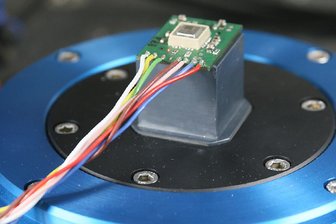
Sensor characterization
Metrological testing of sensors and other small and large components.

Primary calibration
Primary calibration with the lowest possible measurement uncertainty for reference standards and reference sensors.
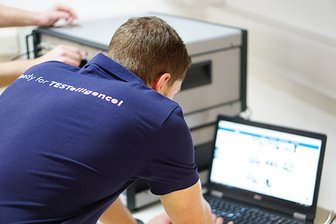
Round-robin tests
We are your competent partner for interlaboratory tests and comparison of your devices under test.
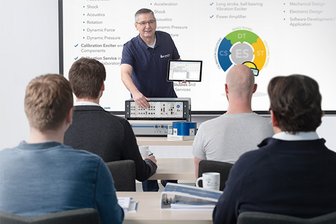
Seminars, trainings and webinars
Well-founded, concise, and precisely tailored to your industry and goals.